
A sample only shows us the beginning
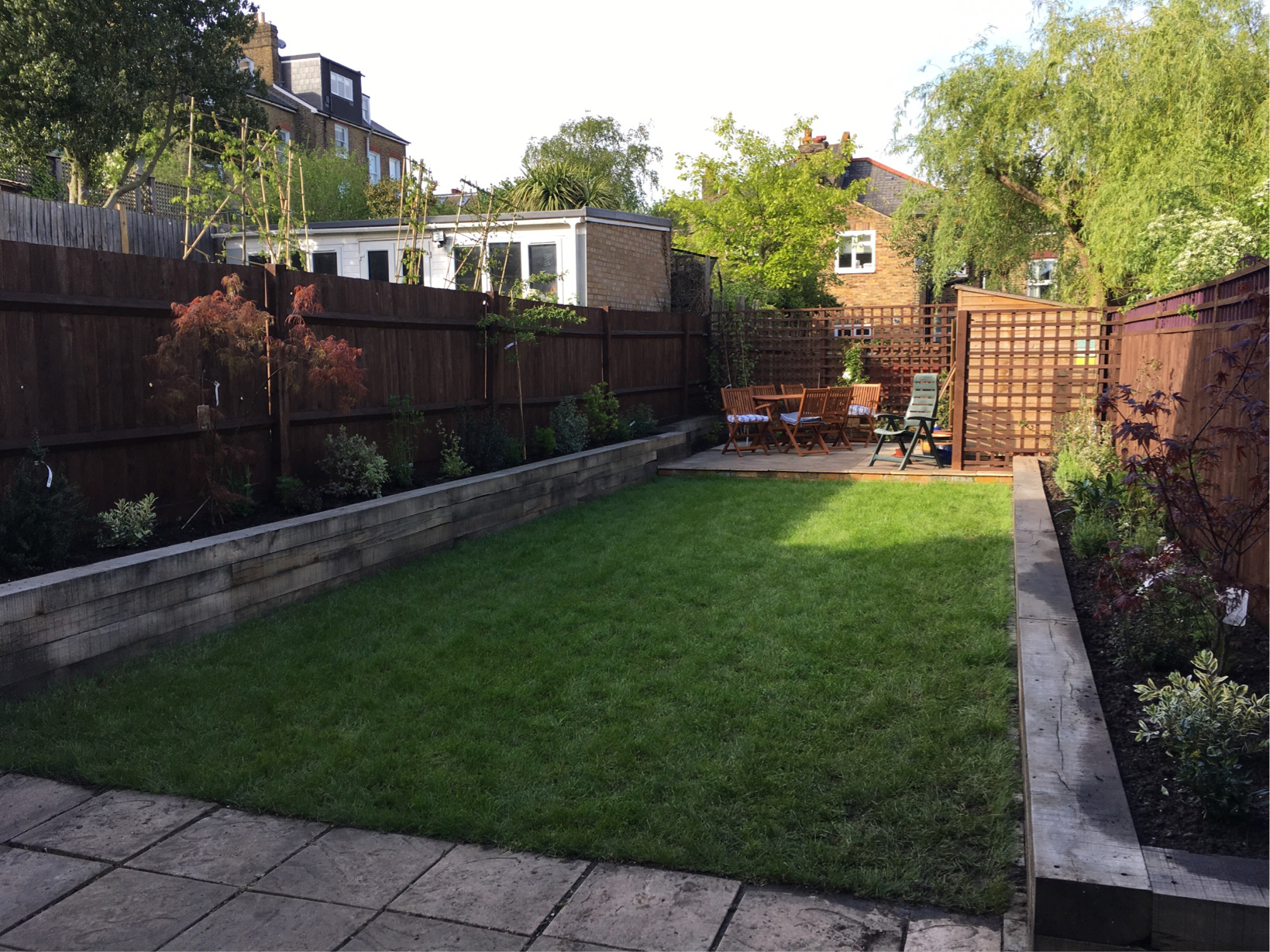
Material samples are useful. We use them regularly with clients because colour, texture and scale are difficult to judge properly from photographs. But a sample usually shows a material at the beginning of its life.
A new piece of timber may have a rich colour that gradually becomes softer and greyer. Natural stone may develop a more settled appearance as it becomes part of the garden. Brick, metals and other materials each follow their own path.
So when we look at a material, we are not only asking whether it looks right now. We are also thinking about what happens next: how it will change, how long it should perform, what maintenance it will need, and whether the client will still like it when it no longer looks exactly like the sample.
Material selection is not simply a decision about appearance. It is also a decision about a material's life cycle.
Ageing is not the same as failing
There is an important distinction between a material ageing and a material deteriorating. They are not necessarily the same thing.
Some materials can change considerably in appearance while continuing to perform perfectly well. Other materials may also age beautifully, but their long-term performance depends on maintenance.
There is a difference between allowing a material to age and allowing it to deteriorate. If cleaning, treatment, protection or periodic maintenance is necessary to preserve performance and lifespan, that should be understood when the material is selected.
We also need to understand the years in between
Real ageing is not a simple comparison between new and old. There is a period between those two points.
A material may change colour unevenly at first. Areas receiving different amounts of sunlight or exposure can develop at different speeds. Some surfaces may pass through stages that look quite different from both the new material and its eventual mature appearance.
Choosing an ageing material also means accepting some of the journey it takes to get there.
Different materials ask different things from us
Some clients enjoy seeing materials change. Others prefer a much more controlled appearance. Neither preference is wrong, but they can lead to very different material choices.
The same applies to maintenance. One client may be comfortable with periodic treatment because preserving a particular appearance matters to them. Another may prefer to allow a material to weather naturally, provided doing so does not compromise its performance.
The question is not simply which material lasts longest. It is how it lives during that time, and what it requires from us to reach that age well.
How we install a material can shape the way it ages
The way a material ages is not determined by the material alone. The construction method, fixing system and detailing around it can all influence how that material will change over time.
There can be several technically correct ways of installing the same material, each creating slightly different conditions for how it will age.
Timber can be used with different fixing systems, joint details, spacing and supporting structures. All may be valid solutions, but they do not necessarily expose every part of the timber to moisture, air movement and sunlight in exactly the same way.
Paving might be installed as a traditional bonded surface or as part of a raised pedestal system. Both can be appropriate, but the paving exists in very different conditions in each. Water movement, support and future access are different.
Material and installation method are part of the same long-term decision. We cannot stop ageing, but we can design for it.
Materials do not age independently
A garden rarely contains only one material. There may be paving, timber, brickwork, metal, rendered surfaces and planting within the same view.
On completion day, those materials have one relationship. Five years later, they may have another. Timber may have softened in colour. Brick may have developed more character. Planting may have grown around hard edges.
We are not simply choosing materials that look good beside one another when they are new. We are choosing materials that will grow older beside one another.
Maintenance does not always mean keeping something looking new
Maintenance is often discussed as though its purpose is to stop ageing. That is not always what we are trying to do.
Sometimes the purpose of maintenance is to allow a material to grow older naturally without losing the qualities it needs to continue performing well. A weathered appearance can be intentional while deterioration is not.
The objective may simply be to help a material age well rather than merely become old.
Sometimes we deliberately begin with materials that already look old
Not every newly constructed garden needs to look newly constructed. There are projects where reclaimed, weathered or naturally aged materials are chosen precisely because we want the garden to feel more established from the beginning.
Old brick, reclaimed stone, weathered timber or another material carrying marks from a previous life can bring something to a new garden that a completely new surface cannot immediately reproduce.
A reclaimed material has already had a life before it reaches the new garden. Its condition can vary from piece to piece, and previous weathering and wear can influence how it should be cleaned, protected, repaired and maintained.
With a deliberately weathered material, aggressive cleaning or an inappropriate treatment might remove exactly the character we selected it for. The aim may be to preserve its performance without making it look new again.
Sometimes the best material is not the one we expected to use
A client may begin a project already having a particular material in mind. That is a useful starting point, but it does not always have to be the final answer.
Once we understand the site, levels, construction, sunlight, planting, intended use and the client's expectations about maintenance and ageing, another material or another method of installing it may make more sense.
Experience adds something a photograph or specification cannot: an understanding of what materials actually begin to look and behave like after they have spent years outside as part of a garden.
We are choosing the future garden as well as the new one
There is a moment at the end of almost every project when everything is new. It is satisfying, but it is not the final version of the garden.
The garden will continue to develop. Planting will grow into the spaces created for it. Materials will change at different speeds. Some will need intervention along the way. Others can largely be allowed to follow their natural course.
The best choice is not necessarily the material that changes least, nor automatically the one that develops the most character. It is the material whose appearance, performance, maintenance and ageing make sense for that particular garden and the people who will live with it.
A material should not only belong in the garden when it is new. It should still belong there as the garden grows older around it.
White Edge Thought
WE CANNOT STOP MATERIALS FROM AGEING. BUT WITH KNOWLEDGE, EXPERIENCE AND THE RIGHT DECISIONS, WE CAN DESIGN FOR HOW THEY GROW OLDER.
Was this article useful?
Thank you for your feedback.