
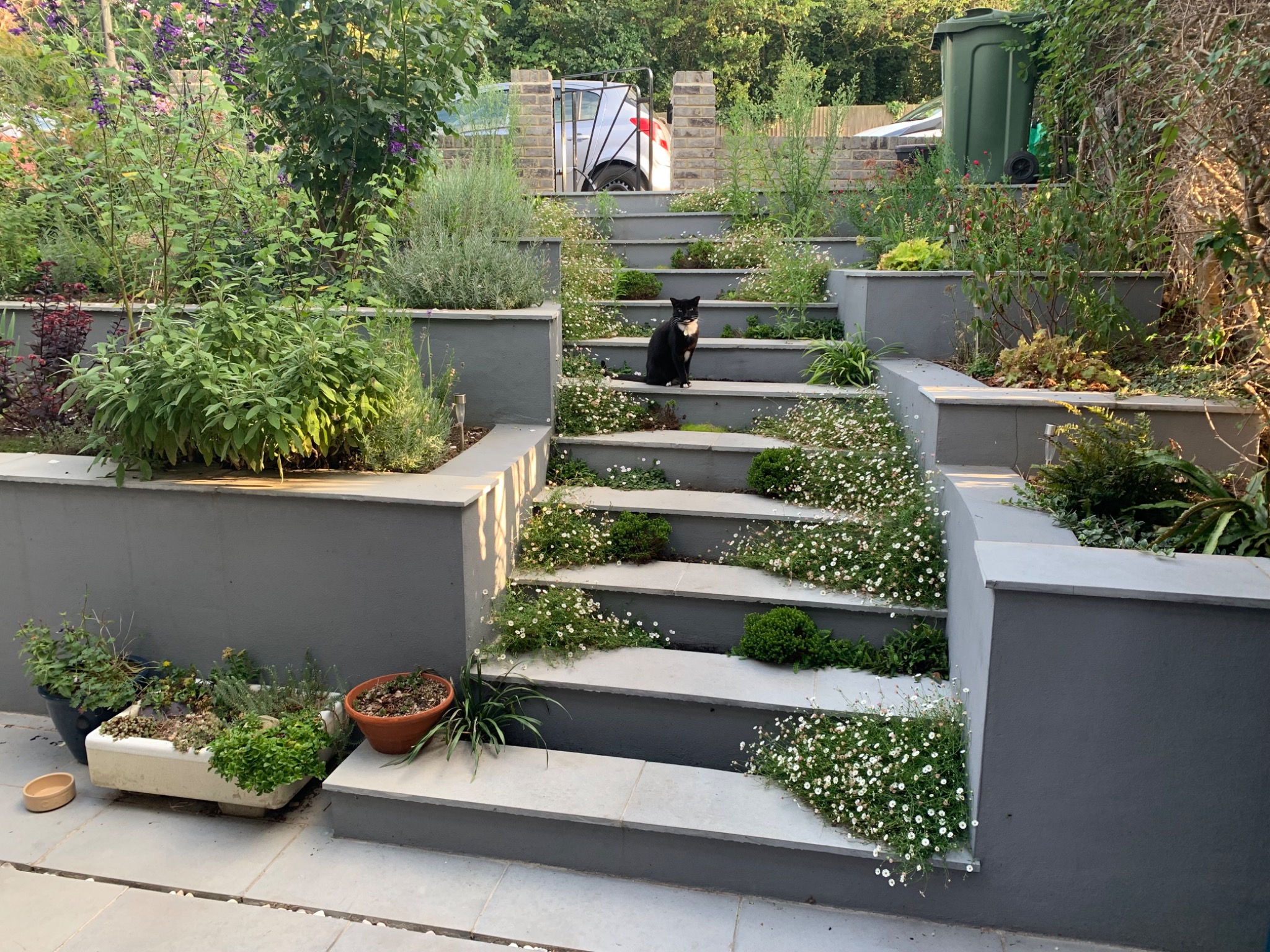
A wall may be doing several jobs at once
A garden wall may define a boundary, retain soil, create a level change, support seating or simply provide a backdrop to planting. In a small London garden, one structure increasingly has to do the work of several.
That makes the wall less of a decorative object and more of a piece of garden infrastructure.
Retaining soil also means dealing with water
A retaining wall is not only holding back soil. Wet soil adds load, and water trapped behind a wall can create pressure of its own. Drainage stone, pipes and outlets may be invisible when the garden is complete, but they can be among the most important parts of the construction.
Moisture can also bring salts, dark areas, staining, render discolouration and freeze-thaw problems to the visible face.
The top of the wall matters too
Copings, caps, overhangs and drip details influence where rainwater goes. A small change at the top can decide whether water is thrown clear or repeatedly runs down the finished face.
Walls connect the garden together
Walls often meet paving, steps, planting beds, fences, screens, lighting and seating. They may also form part of an outdoor kitchen, planter or water feature.
Those connections mean that the wall cannot always be designed in isolation.
Sometimes another specialist needs to be involved
Modern garden construction can involve electricians, plumbers and structural engineers. One of the most useful questions before building is: who else needs to be involved before we build this?
A structural requirement can change a foundation. A plumber may change a pipe position. An electrician may need a cable route before finishes are installed. The best result often comes from allowing those areas of knowledge to meet before the materials do.
Small walls can be critical
A wall does not need to be large to be important. Other features may depend on it, and its foundation may be doing far more work than the visible height suggests.
Existing walls deserve particular caution. Changing levels, drainage or adding fencing can change the conditions and loads around a structure that has already spent decades in the garden.
The garden will keep changing around it
Planting grows, roots develop and moisture conditions change. A wall that begins life beside open ground may later sit beside dense planting and irrigation.
Good wall construction therefore considers not only what the wall is doing today, but what the garden may ask it to do later.
White Edge Thought
In a small garden, good design is often not about fitting in more things — it is about asking each thing to do more.
Was this article useful?
Thank you for your feedback.