
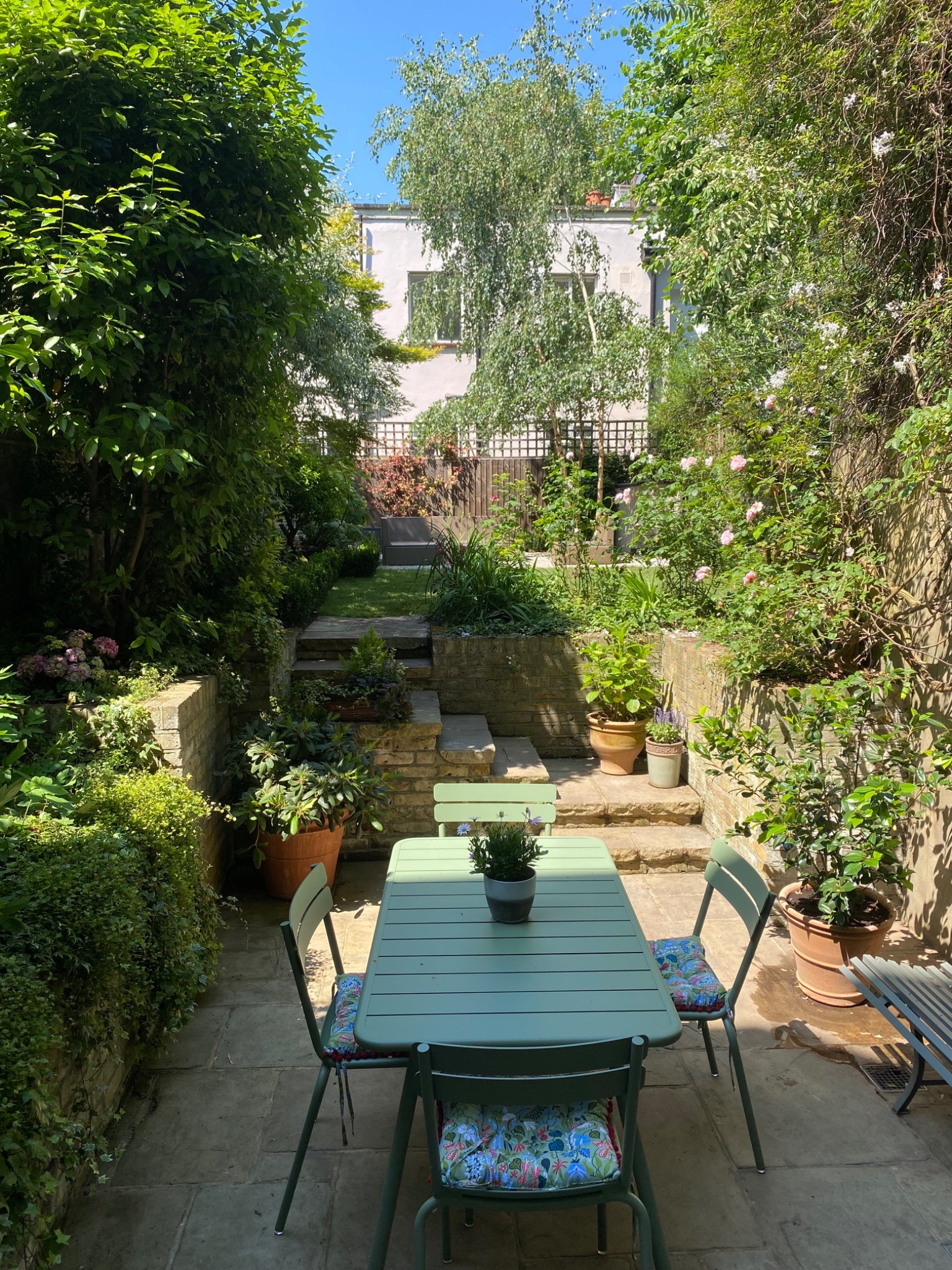
Spend some time in a garden after rain and you start to notice differences that aren't always obvious on a dry day. One part of the paving is already dry. Another is still dark and wet. Beneath a tree, the air feels cooler and the surface can stay damp for much longer. In summer, that same spot might be the most comfortable place to sit.
It is easy to look at this and blame the tree. But trees are catching rain, taking water from the soil, blocking sunlight and changing the movement of air. A mature tree can create conditions quite different from those only a few metres away.
LONDON IS A CITY OF TREES
There are an estimated 8.4 million trees across London, with around a fifth of the capital's urban forest estimated to be in private gardens. They provide shade, habitat and structure, but they also help manage some of the less visible pressures of city life. London's urban forest has been estimated to provide more than £133 million a year in ecosystem-service benefits, including pollution removal, carbon storage and rainfall interception.
And shade is becoming increasingly valuable. London experienced temperatures above 40°C for the first time in 2022. The tree that makes a patio stay shaded after a shower may also be the tree that makes that same patio bearable during a heatwave.
DAMP PAVING DOESN'T NECESSARILY MEAN WET SOIL
A building casts a shadow. A tree casts a shadow, but it also interacts with almost everything around it. Rain meets the canopy before the ground. Some stays on leaves and branches and evaporates; some falls through. Roots take water from the soil, and leaves release water into the atmosphere through transpiration.
This is why the soil beneath an established tree can be surprisingly dry. The RHS notes that trees can create dry conditions beneath their canopies because of competition for moisture. So you can have damp paving above relatively dry soil.
A piece of paving doesn't dry because the soil underneath it is dry. It dries because of conditions at its surface — sunlight, temperature, wind and evaporation. Beneath a dense canopy, those conditions change. The surface may dry slowly even while the tree's roots are taking considerable amounts of water from the ground.
LOOK AT THE PAVING, NOT JUST THE TREE
If a terrace stays dark and damp after rain, the tree might be contributing. But it may not be the reason. The paving might have a very small fall. Water might collect against an edge. The joints may hold moisture, or the underlying construction may not drain particularly well. Shade can make an existing problem more noticeable because the surface has less opportunity to dry.
This is why we try not to diagnose a garden from one symptom. Moss beneath a tree doesn't automatically mean excessively wet ground. A damp patch doesn't automatically mean drainage failure. And a dry border doesn't mean the whole garden needs more irrigation. The garden needs to be looked at as a whole.
THE TREE CHANGES THE JOURNEY OF RAIN
A tree can also help a garden deal with heavy rainfall. The canopy intercepts some rain before it reaches the ground, while roots can influence how water moves through the soil. Across London, the urban forest is estimated to prevent millions of cubic metres of surface-water runoff from entering drainage systems each year.
At garden scale, the effect isn't uniform. Stand beneath a mature tree during rain and you can hear water dripping long after the rain itself has eased. Branches collect water and release it at particular points. The edge of the canopy can behave differently again.
The tree isn't simply stopping rain. It is changing its journey. That can be useful, but it can also mean that one area of paving or soil receives more water than expected.
AND THEN COMES THE HEAT
Research looking at London's 2022 heatwaves found that areas with more tree canopy were cooler than areas with very little canopy. The difference was measured at around 0.8°C for daytime maximum temperatures and about 2°C for minimum temperatures.
You notice the difference on a hot day. A mature canopy can create somewhere that feels completely different from an exposed paved terrace. And once a tree has reached a decent size, you can't replace that cooling effect with a newly planted sapling overnight.
During prolonged dry periods, trees lose water through their leaves while the soil around their roots becomes increasingly dry. Newly planted trees are particularly vulnerable because their roots have not yet established.
Compacted soil, limited rooting space and little follow-up watering make establishment harder. Good soil preparation, adequate rooting space, mulch and proper watering give a young tree a much better opportunity.
We are relying on trees to give us more shade as the city gets hotter, while hotter weather is making establishment harder for the trees themselves. Planting is only the beginning. The first few years matter enormously.
A MATURE TREE CHANGES THE GARDEN
Trees aren't fixed pieces of a landscape. The canopy widens, shade moves and roots extend into areas that might once have been open ground. This is particularly noticeable in older gardens designed around much smaller trees. A sunny lawn can become shaded. A flowering border may become harder to maintain. Paving can become more susceptible to moss.
At the same time, the garden gains scale, maturity and a sense of permanence that would be difficult to create artificially. It is rarely as simple as good or bad.
SO WHAT SHOULD WE LOOK FOR?
If one part of a garden seems damper beneath a tree, look closely. Is the surface damp or is the soil damp? Does water collect there, or does the area simply dry more slowly? Does the pattern follow the canopy, and what happens just outside it? Has it appeared recently? And what happens during a hot, dry period?
Sometimes the tree contributes to a problem; sometimes it reveals one already there. There may also be nothing wrong beyond a surface drying more slowly. For mature trees, understanding those conditions is usually the best starting point.
SO, DO TREES REALLY MAKE A GARDEN DAMPER?
A tree can leave paving slower to dry while taking water from the soil. Whether that needs attention depends on where water collects, how the paving was built and what happens beyond the canopy.
White Edge Thought
A TREE DOESN'T JUST OCCUPY A GARDEN.
IT CHANGES HOW THE GARDEN WORKS.
Was this article useful?
Thank you for your feedback.