
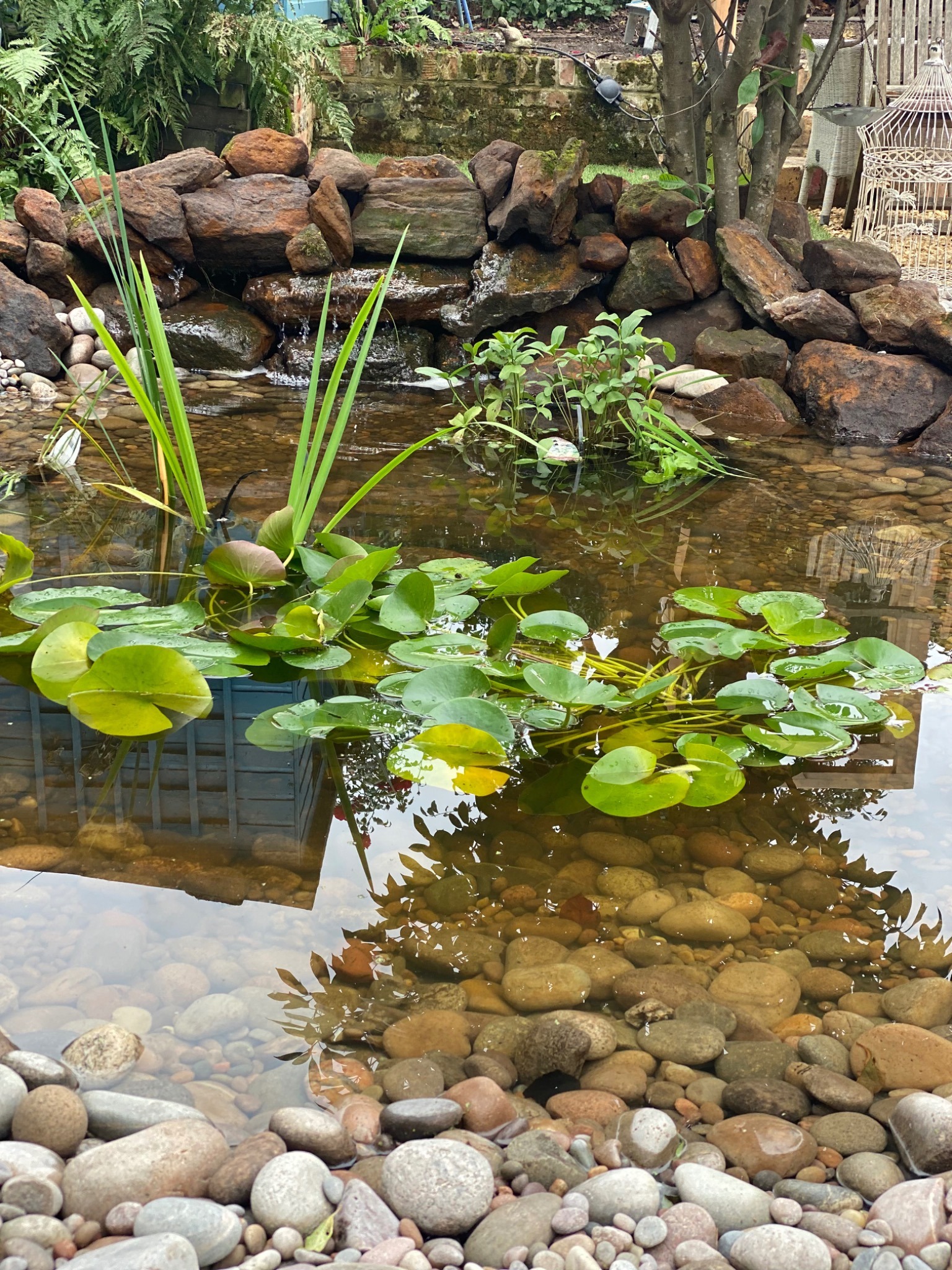
A garden pond can start as a very deliberate piece of construction. We decide where it will sit, how big it will be, how deep it needs to be, what the edges will look like and how the water will move through it.
But once the water goes in, things start to change. Plants settle in, leaves find their way into the water, insects arrive, and birds come to drink and bathe. Amphibians may find it and, in time, make it part of their life cycle. Water levels rise and fall with the weather, and the pond slowly develops a character of its own. It may begin as something we build, but it quickly becomes part of the living garden.
A SMALL FEATURE WITH A LARGE ECOLOGICAL ROLE
Freshwater Habitats Trust describes ponds as an important habitat for freshwater biodiversity, with up to two-thirds of freshwater species found in ponds. It also estimates that around half of UK ponds have been lost since 1900, with many of those that remain in poor condition.
With so many ponds lost, a new water habitat in a private garden can make a difference on a small scale.
And nature can find it surprisingly quickly. The RHS notes that pond skaters and diving beetles can arrive within days or weeks of a new wildlife pond being created, while damselflies and amphibians may appear within the first year. You can build the pond, but you cannot decide exactly who will move in.
Frogs, toads and newts can use ponds for breeding. Aquatic insects make use of the water and surrounding vegetation, while birds may come to drink, bathe or feed around the edges. Each visitor uses the pond differently, often moving between the water and other parts of the garden.
PLANTING AT THE WATER’S EDGE
The edge of a pond is just as important as the water itself. A hard, clean line between paving and water gives a very different feeling from a soft margin of planting, stones and damp ground. The edge can become a transition between the garden and the pond rather than a clear dividing line. It also creates different growing conditions. Some plants will thrive in damp ground, while others are suited to shallow water or deeper parts of the pond.
The RHS recommends including a long, shallow slope on at least one side of a wildlife pond. This gives wildlife easier access and creates damp habitat as water levels naturally rise and fall. For us, this is where the practical side of pond building and planting come together. The edge has to look right, but it also has to work.
THE BEST PART COMES AFTER THE GROUNDWORK
For us, one of the most enjoyable parts of building a pond comes when most of the hard work is already finished. The excavation is done, the groundwork is in, the liner is fitted and the shape is there. Then we start filling it with water. That is when we put our boots to one side, roll up our sleeves and get in.
We arrange the stones by hand, moving them, turning them and trying different positions until they feel right. When we are building a waterfall, there is always a plan, but the stones themselves have a say in how that plan works. Their shape, size and position all affect the way the water will move. Sometimes a stone needs to move only a little to change the whole flow.
We step back, look at it from another angle, move something again and watch how the water responds. Then come the plants. This is usually the point where the pond starts to feel like a pond rather than a construction project. There is something almost meditative about standing in the water, concentrating on the stones in front of you, thinking about the movement of the water and slowly bringing everything together by hand. It is one of the parts of our work that we look forward to.
REFLECTION, MOVEMENT AND SOUND
A pond also changes how the garden looks and sounds. A still surface catches reflections of the sky, trees, planting and surrounding architecture. Those reflections are never quite the same. A calm morning, a windy afternoon and a rainy evening can make the same pond look completely different.
Moving water brings sound as well. A small cascade can make a garden feel more alive, while even a quiet pond has its own movement — ripples, insects skimming the surface, leaves drifting across the water and plants moving around the edges.
Surrounded by planting and shade, a pond can also bring a feeling of coolness to a garden, particularly during warmer weather. These are difficult things to measure, but they are often what people notice first.
A POND IS PART OF A BIGGER GARDEN
The RHS’s 2025 State of Gardening report mapped 25.8 million gardens across Great Britain. Its analysis of BTO Garden BirdWatch data found that UK gardens have recorded 44% of UK bird species, 43% of mammal species and more than half of butterfly species. Not every garden will support the same wildlife, but the figures show how much potential there is within the spaces around our homes. A pond adds another piece to that picture.
A bird that comes to drink may then move into a nearby tree. An amphibian may use the planting around the pond as well as the water itself. Insects that spend part of their lives in the pond become food for other creatures in the garden. The pond becomes connected to everything around it.
THE POND DOESN’T STAY THE SAME
A pond is a constructed feature, but it is exposed to things we cannot control. Water evaporates, rain fills it again, leaves fall in, plants spread and die back, organic matter builds up and sediment settles on the bottom. The water level changes with the seasons.
Some of this needs managing, but not all of it needs removing. A pond that is constantly cleaned and stripped back may lose some of the natural conditions that make it useful to wildlife. On the other hand, if everything is simply left to accumulate, the pond can gradually change beyond what was intended.
The RHS advises avoiding unnecessary removal of sediment because the mud can provide habitat for small creatures. When sediment does need to be removed, it recommends doing so carefully and gradually to reduce disturbance to pond life.
So pond maintenance is partly about knowing when to intervene and when to leave things alone. The aim isn't to keep the pond exactly as it was on the day we built it, but to help it continue to work as the garden around it changes.
Its position, edges, planting, stones and water all need to work together from the start, but there also needs to be room for the garden to take over.
White Edge Thought
WE SHAPE THE WATER; NATURE WRITES THE REST OF THE STORY.
Was this article useful?
Thank you for your feedback.