
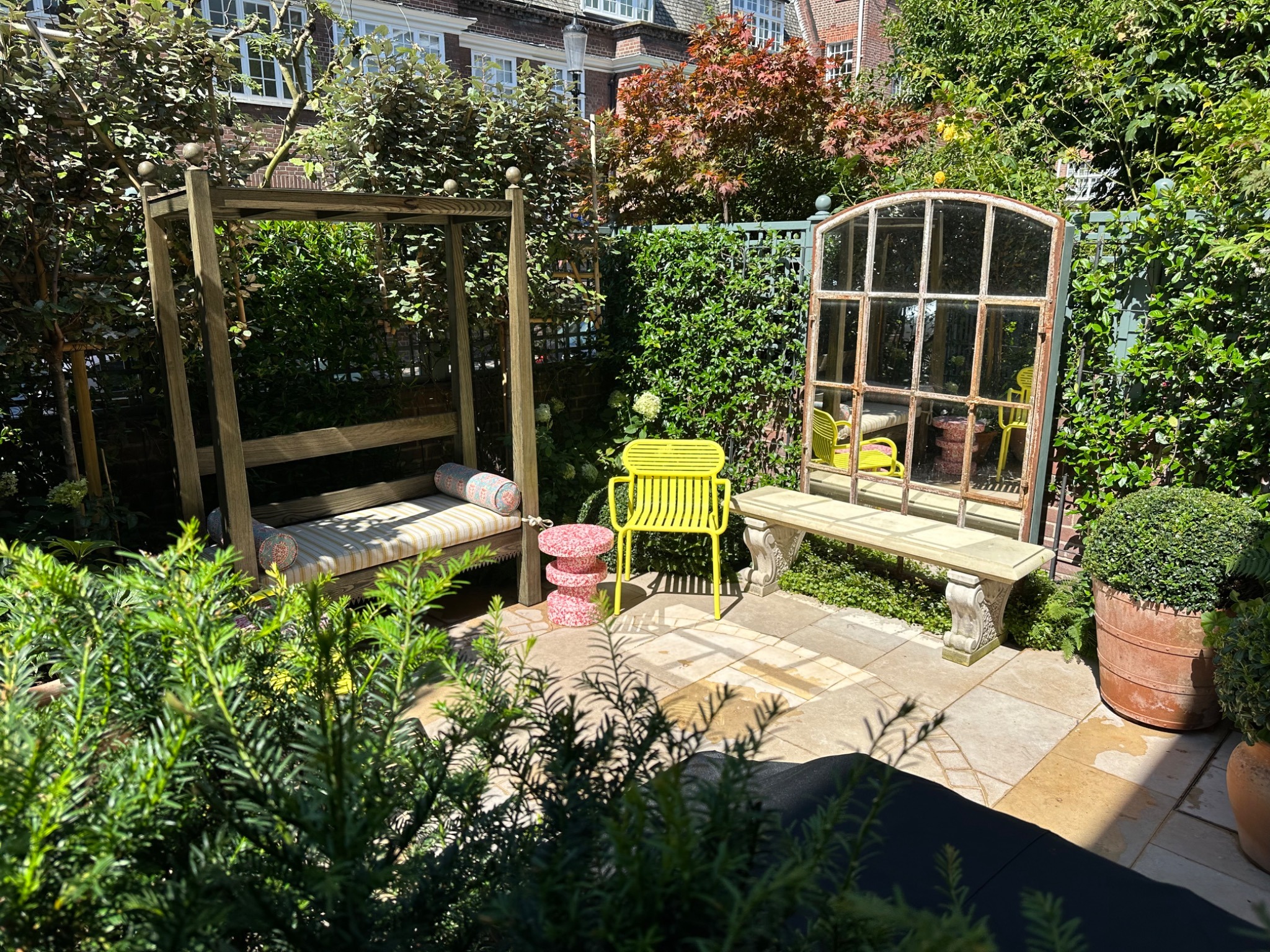
Have you ever walked from one part of a garden to another and immediately noticed that it feels colder? It can be surprising how much difference there can be within a relatively small garden. One part might catch the afternoon sun and feel comfortable, while another corner feels exposed and cold. A terrace can be pleasant enough to sit on, while the side passage beside the house is somewhere you tend to walk through rather than stop in.
We actually notice this quite often as a team. We all come to work from different parts of London, and when we arrive in the morning, one person might say, “That was such a cold morning,” while someone else says, “Really? I thought it was quite warm.” London is not completely flat, and differences in relief and elevation can affect local conditions, including how exposed a place is and where colder air settles.
A GARDEN CAN HAVE SEVERAL MICROCLIMATES
The orientation of the garden, its levels, buildings, walls, fences, hedges and trees all have an influence. A south-facing part of a garden will generally receive more sunlight than a north-facing one, while a sheltered corner can feel completely different from an exposed area.
We learn these things simply by using a garden. You find the sunny spot for your morning coffee, know which part is windy and which corner is usually protected. Once we start changing the garden, we start changing these conditions as well.
WIND CAN CHANGE EVERYTHING
On one of our projects, the effect of wind was very obvious. The side of the house led towards an alleyway and originally had a metal gate, so the wind could move through without much resistance. It was disturbing the garden, and the simplest solution was to replace the gate with a solid timber one.
It was a small change, but it made a noticeable difference. We were not trying to make the garden warmer; we were simply stopping the wind from moving through it so easily. A boundary is usually shown as a line on a plan, but in reality it can affect airflow and shelter. A fence, hedge, wall or gate can all change the conditions around them.
COLD AIR HAS ITS OWN MOVEMENT
Cold air also moves through a garden. On a clear, cold night, surfaces lose heat and the air close to them cools. Cold air becomes denser and can move downhill, collecting in lower parts of a garden. These areas are sometimes referred to as frost pockets. The shape and levels of a garden therefore matter. A low point can collect cold air, while a fence or hedge across a slope can sometimes stop it from draining away.
THE SUN MATTERS MORE THAN WE THINK
Winter tends to make these differences much more obvious. The sun is lower in the sky, the days are shorter, and areas that receive very little direct sunlight can stay cold for a long time. A south-facing wall can absorb heat during the day and release some of it later.
We notice the same thing while working in gardens. There are days when the front garden is perfectly comfortable first thing, but later the sun has moved around and it has become too hot and exposed. We move to the back garden because it has become the more comfortable place to work.
You only really understand this when you spend a whole day in a garden. A plan can show orientation, but it cannot tell you exactly how a place will feel at ten in the morning compared with three in the afternoon.
EVERYTHING WE BUILD CHANGES THE CONDITIONS AROUND IT
A wall changes airflow and creates a surface that can absorb and release heat. A boundary changes exposure. A terrace changes the level and the material under your feet. A garden room creates shelter but can also create shade.
Think about a raised flowerbed. We may raise it to improve drainage, change the soil conditions or create a better environment for a particular plant. We are deliberately changing the ground conditions because that is what the plant needs.
But that is only one way of doing it. A greenhouse takes the idea further. Instead of mainly changing the ground conditions, we create a different environment above the ground, changing the air temperature, humidity and protection around the plants.
We do something very similar for ourselves. A terrace, wall, pergola, garden room or sheltered seating area can create protection from the wind, catch the winter sun, provide shade in summer or simply make an area feel more enclosed.
IT IS NOT ONLY ABOUT TEMPERATURE
The conditions we create are not always about warmth. We choose plants for their colour, texture and form, but also for their fragrance and the wildlife they attract. Some planting works particularly well beside a seating area because you can smell it as you sit there. Other plants bring movement, rustle in the wind or create a feeling of enclosure. These things change the experience of a place without changing its actual temperature.
DESIGNING FOR HOW A GARDEN WILL FEEL
A seating area can be beautifully positioned on a plan yet sit directly in the prevailing wind. A garden room may provide useful shelter while casting a large shadow over an important planting area. Experience helps us look beyond the immediate purpose of a feature and consider what else it will change.
A cold corner is not necessarily a mistake, and a shaded area is not necessarily a problem. Sometimes these differences are exactly what give a garden its character. The important thing is to understand them before we start building.
White Edge Thought
EVERYTHING WE BUILD CHANGES THE CONDITIONS AROUND IT.
SOMETIMES WE CHANGE THE GROUND, SOMETIMES THE AIR, AND SOMETIMES THE AMOUNT OF SUN, WIND OR SHELTER.
Was this article useful?
Thank you for your feedback.