
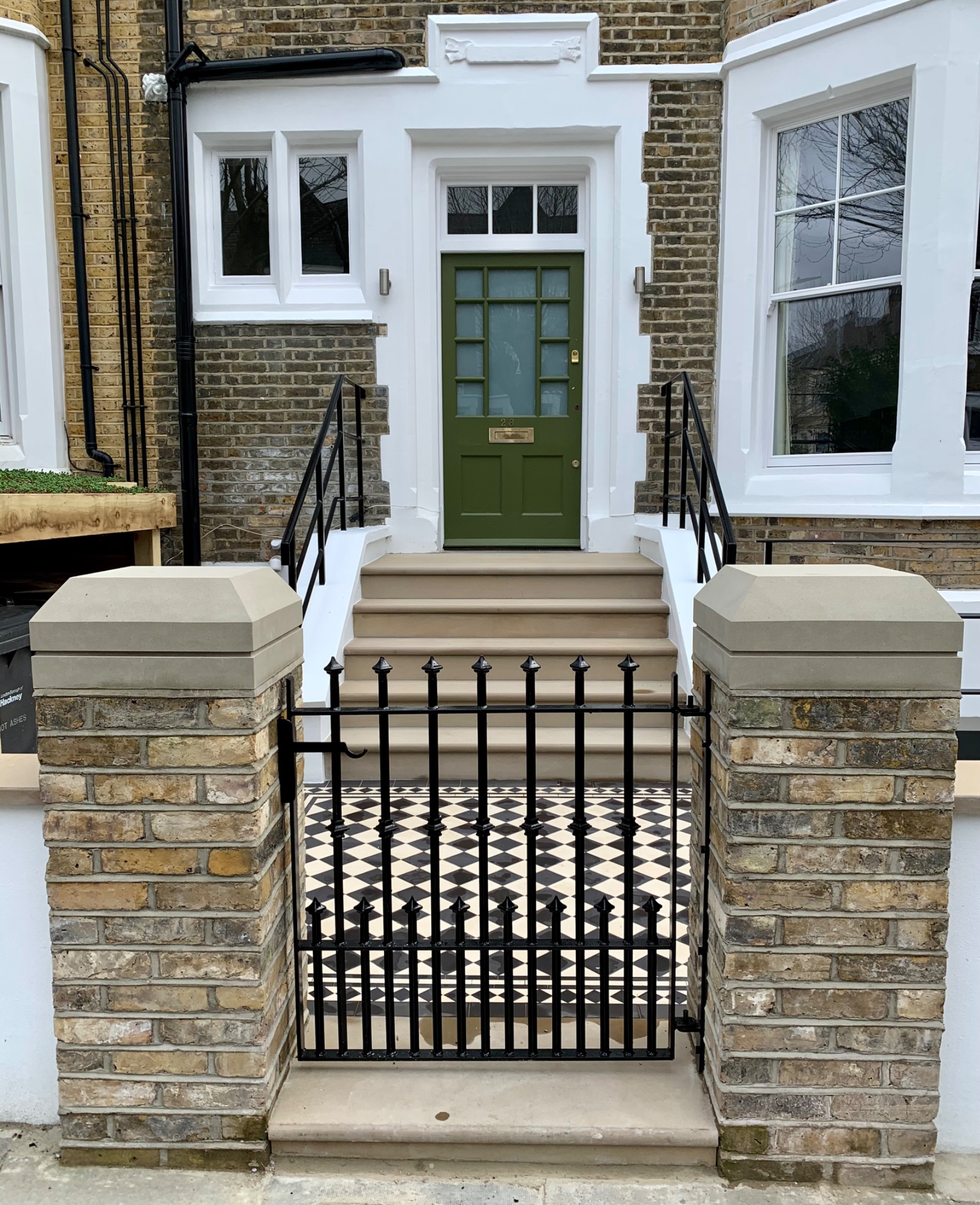
London Stock was once simply a contemporary material
London Stock brick belongs to a long London building tradition. Historic England notes that stock brick came into general use in London after the Great Fire of 1666, and by around 1700 brownish stock brick was widespread.
The bricks we now treat as heritage were once practical contemporary building materials.
London was partly built from what London produced
Historic brickmaking could incorporate combustible material and ash associated with London's waste stream. Parts of London were effectively built using material that London itself was producing.
Variation came from raw materials, minerals, firing and later weathering — one reason old stock brickwork rarely reads as one perfectly uniform colour.
Matching old brickwork is more than finding the right name
Dimensions, texture, edges, colour variation, mortar and weathering all influence whether new work sits comfortably beside old. A perfectly consistent new brick can sometimes look too consistent; an old reclaimed brick is not automatically a match either.
The aim may not be to find an identical brick, but one whose differences belong comfortably among the differences already there.
Sometimes good material knowledge means knowing who to ask
Over the years we have built relationships with suppliers who understand old brick, reclaimed stock and unusual batches. Samples and seeing the material in person can tell us more than a product name alone.
Sometimes good material knowledge also means knowing who to ask.
Reclaimed is not automatically the sustainable answer
The Brick Development Association describes clay brick as a material with a typical service life exceeding 150 years, potentially much longer. Reuse can therefore make great sense, but reclaimed brick still has to be recovered, cleaned, sorted, transported and assessed for suitability.
Sustainability depends on the whole decision, including rejects, transport and whether the brick is suitable enough to last in its next use.
Reuse can preserve continuity
When an existing wall is dismantled, suitable bricks can sometimes be cleaned, sorted and reused in the new garden. It is not artificial ageing. It is continuity.
At 76 Southbank, more than 71 tonnes of reclaimed bricks were cleaned and reinstated, while 63,500 new Staffordshire engineering bricks were also used. The useful lesson is that the answer does not always have to be reclaimed or new. Sometimes it is both.
New brick is not the enemy of old brick
New brick can offer predictable performance, dimensions and sourcing while still providing tonal and textural variation. A contemporary garden beside a Victorian house can respect the architecture without trying to imitate it.
There is a useful distinction between matching and belonging.
Mortar changes the brickwork too
Mortar colour, texture, depth and joint profile can change the appearance of the same brick dramatically. With historic softer brickwork, the strongest mortar is not automatically the best mortar.
Could one of today's bricks become tomorrow's London Stock?
London Stock was not created as heritage. Time made it heritage. It is possible that a brick arriving on sites today will be the material somebody is trying to source in another hundred or two hundred years.
We cannot manufacture heritage in advance. The London Stock brick reminds us that the materials we now call traditional were once contemporary too.
So perhaps the useful question is not simply whether a brick is old or new. What are we asking this brick to do, and where does it need to belong?
White Edge Thought
Every heritage material was once simply a new material.
Was this article useful?
Thank you for your feedback.