
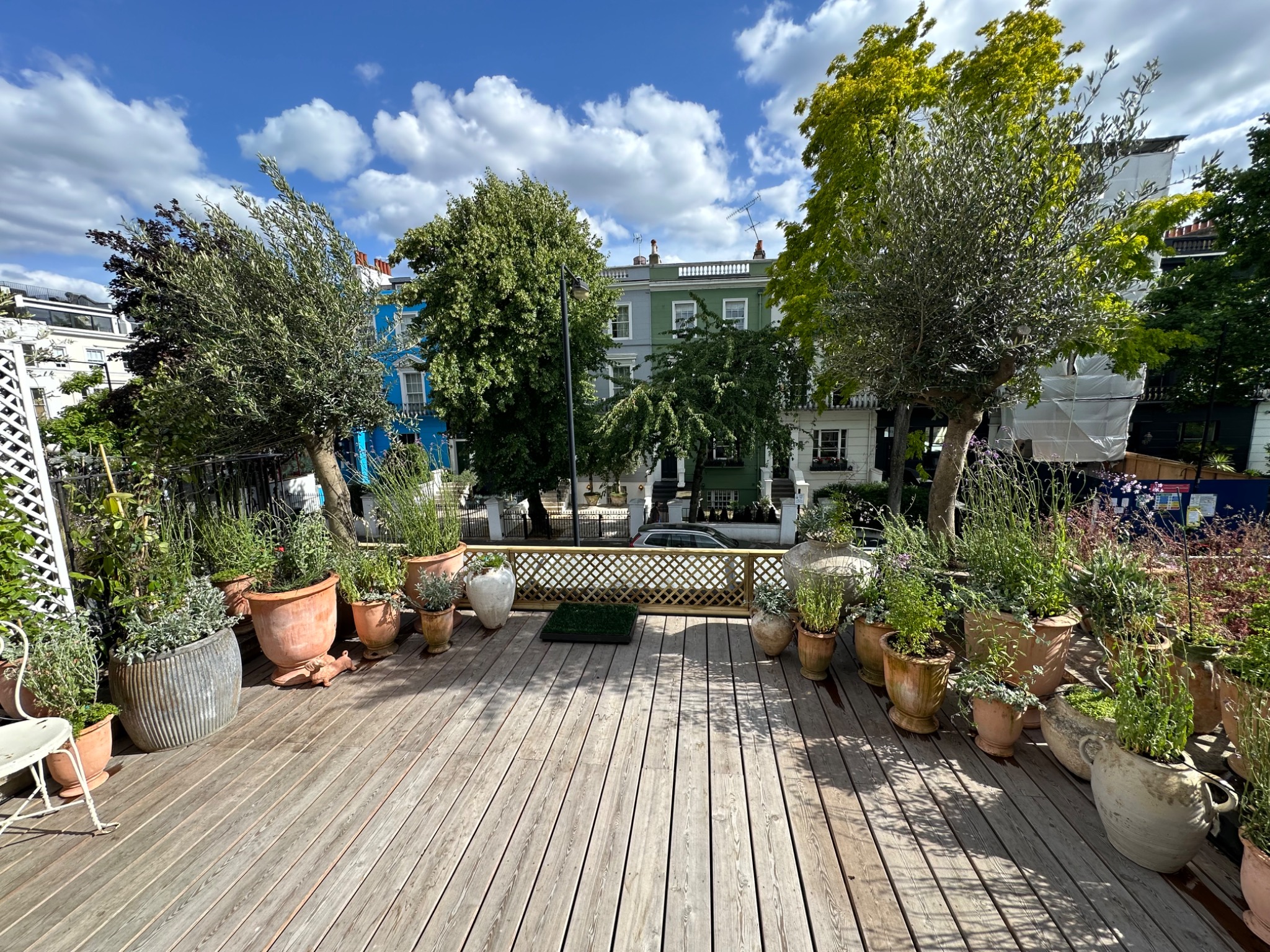
A pot changes the surface beneath it
On paving, the area beneath a pot can stay darker, greener or stained — or sometimes cleaner because it has been protected from the weather. On decking, the timber beneath a container can remain wetter and weather at a different rate from the exposed boards around it.
The mark is not always a defect. It is evidence that one part of the surface has been living in different conditions.
Container planting can be part of the design
Where a client already knows that pots and planters will be important, we can allocate general container planting zones during design. That helps us think about circulation, drainage, irrigation and the surfaces beneath them before the garden is finished.
Where there is planned planting, there should also be a plan for water
A group of containers may need regular watering through warm weather. If they are part of the intended garden, a nearby water supply or drip irrigation can be considered during construction rather than added awkwardly later.
Large planters become semi-permanent
Once a planter is large enough, filled with soil and planted, moving it may no longer be realistic. At that point its drainage, saturated weight and relationship with the surface beneath deserve to be treated as part of the construction.
On decking, terraces, roofs or balconies, total load can matter enough to require structural advice.
Excess water needs somewhere to go
Water leaving a planter should not simply be allowed to collect wherever gravity takes it. Drainage routes, feet or supports and the surrounding falls can influence whether the area dries properly.
Not every pot needs to become architecture
Smaller seasonal pots are different. They can move as the garden changes, and sometimes the sensible approach is simply to move them occasionally and accept that outdoor surfaces will show some evidence of use.
The useful distinction is between permanent and temporary containers — and between which changes should be designed out and which ones we are happy to live with.
White Edge Thought
A garden that is designed to change does not need to look untouched.
Was this article useful?
Thank you for your feedback.