
Your body notices rhythm before you do
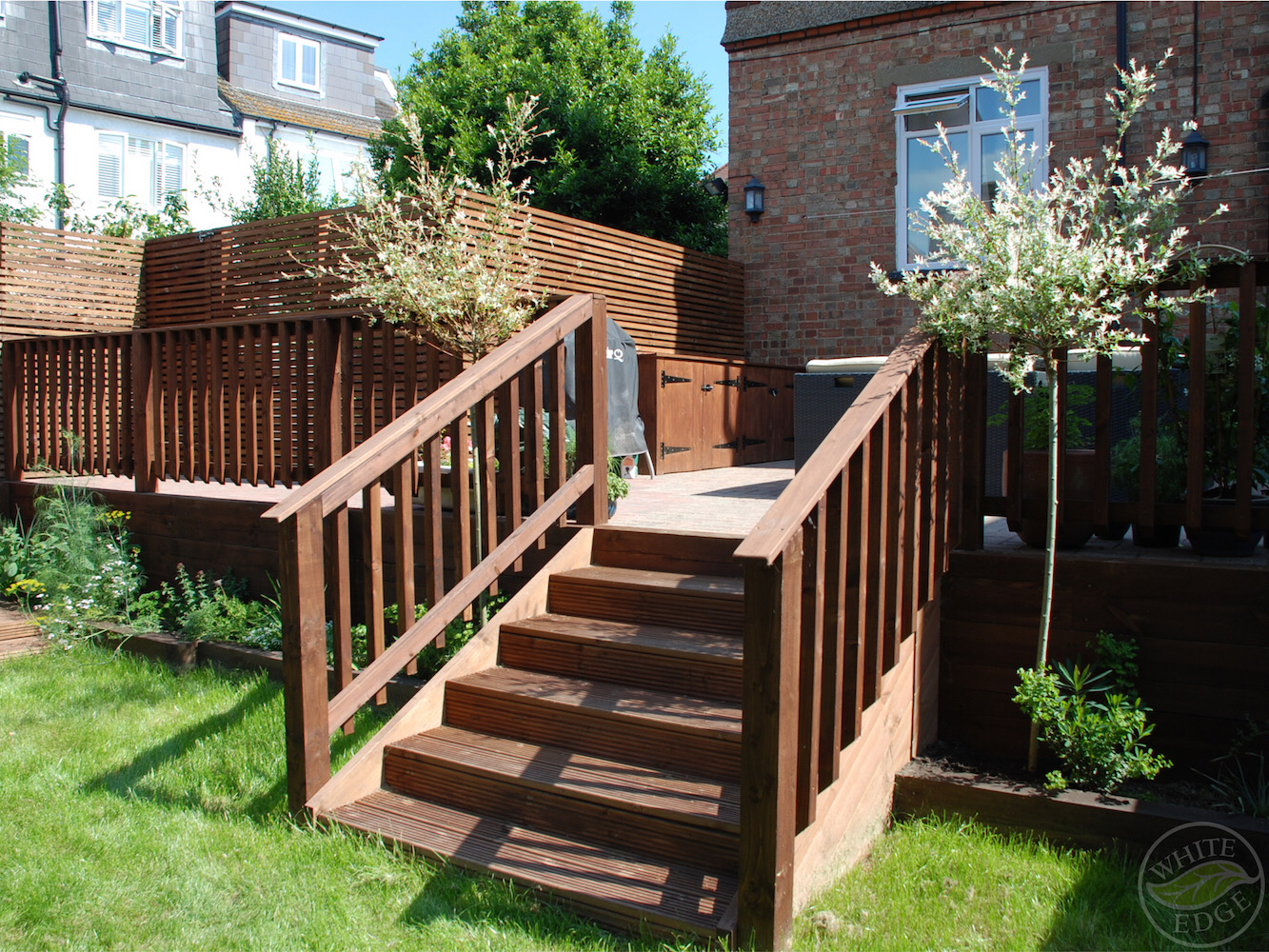
When we walk up or down steps, the body quickly predicts the next rise and tread. If that rhythm changes unexpectedly, even a technically small difference can make the sequence feel awkward.
Finished surface to finished surface
Step dimensions should be understood from the final surface, not only from the structural base. Stone, timber, porcelain, bedding and other finishes all affect the final rise.
London front gardens make the problem obvious
A short distance between pavement and front door can contain a surprising change in level. The entrance has to work with the architecture, available space, drainage and the route people naturally take.
The most compact solution is not necessarily the best solution
Space pressure can encourage steep, tight steps. But the people using them matter: children, older visitors, carrying shopping or moving bins can all change what feels comfortable and sensible.
Steps are part of a journey
A step is rarely experienced as an isolated object. What happens before it and after it affects how it feels. Direction changes, landings, gates and door positions can make the same dimensions feel very different.
Visual perception matters too
Edges, material changes, shadows and surrounding planting can either clarify a step or make it harder to read. Good detailing helps the eye understand the change in level before the foot reaches it.
The best steps disappear
When the rise, depth, direction and surrounding levels work together, people tend not to think about the steps at all. That is often the sign that the hidden planning has done its job.
A comfortable step is the result of several decisions agreeing with one another, not one dimension being correct in isolation.
White Edge Thought
Good steps solve the level. Great steps make the journey feel natural.
Was this article useful?
Thank you for your feedback.