
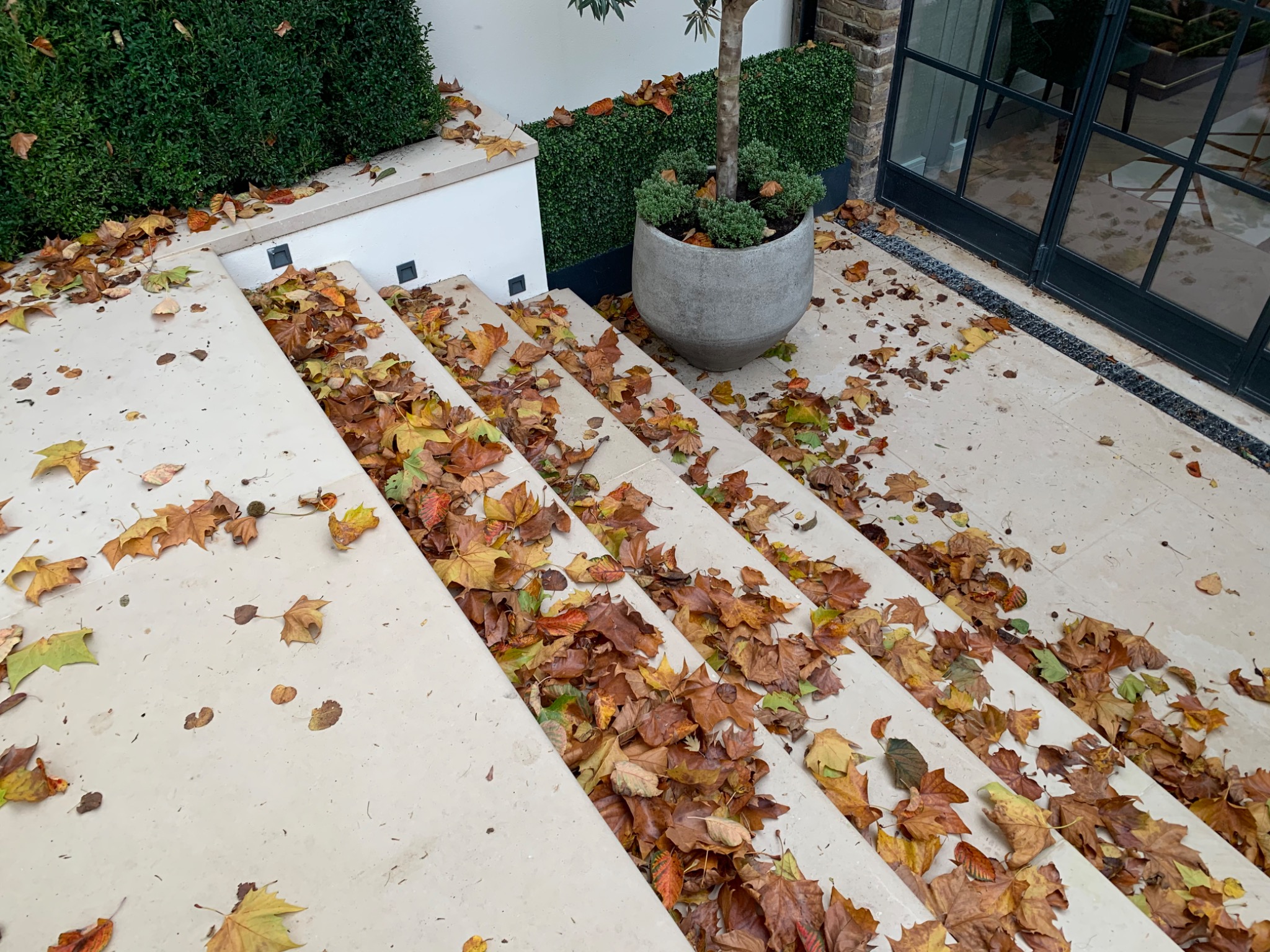
Leaves change once they stay wet
A dry leaf is light and temporary. A layer of wet leaves behaves differently: it holds moisture against the surface, breaks down and can create organic staining or slippery areas.
Different surfaces respond differently
Porcelain, natural stone, brick, concrete and timber do not all absorb moisture in the same way. Texture, porosity, joints and shade influence how quickly a surface dries and how visible organic marks become.
Joints collect more than the paving
Leaves and fine organic debris often settle in joints, edges and drainage channels. Those are also the places where moisture can remain longest, so clearing the main surface while ignoring the edges can miss the area that needs attention most.
Timber needs air as well as cleaning
Decking naturally changes with weather. Persistent leaf build-up can keep local areas damp and reduce airflow around the board surface. Regular light clearing is usually more useful than waiting for a heavy layer to accumulate.
Look after the places that matter
Entrances, steps, shaded paths and frequently used routes deserve particular attention because wet organic material can change grip as well as appearance.
Where do all those leaves go?
There is no single answer. Some gardens can compost leaves or use suitable leaf material on site; others use local garden-waste collection. The important point is that autumn material does not always need to be treated as rubbish. Good maintenance is not always about removing it from the garden. Sometimes it is simply about moving it to the right place.
Materials age. Maintenance decides how.
Outdoor materials are supposed to experience seasons. Maintenance is not about keeping a garden frozen in the condition it had on completion; it is about helping materials weather in a controlled and appropriate way.
Autumn is not damaging a garden simply by arriving. The issue is what happens when moisture and organic material remain in the wrong place for too long.
White Edge Thought
A garden does not need protecting from autumn — it just needs to be ready for it.
Was this article useful?
Thank you for your feedback.