
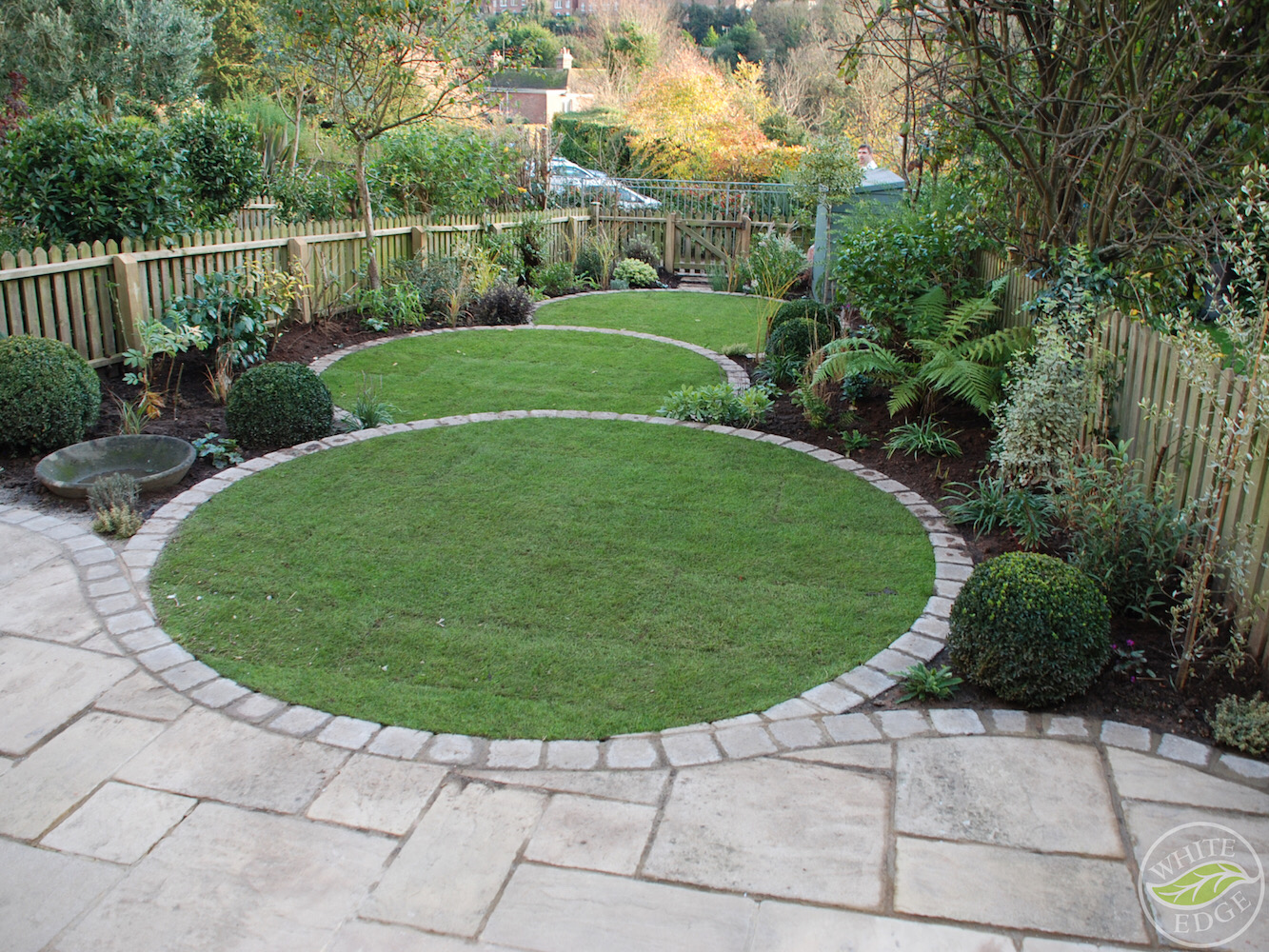
A Boundary Is More Than The Part You See
A garden boundary can look like one of the simplest elements in a landscape. We see boards, panels, rails and posts, and it is easy to think of the fence as a surface placed around the edge of the garden. Structurally, however, the visible timber is only the final part of a much larger system.
The strength of a fence begins below ground. Post depth, foundations, soil conditions, drainage, spacing, rails, fixings and the exposure of the site all contribute to whether a boundary remains straight and stable over time.
Boundaries Have Always Been Working Structures
Garden boundaries have never existed only to provide a neat backdrop. Historically, walls, hedges, fences and other forms of enclosure divided land, controlled movement, protected planting and livestock, created shelter and established ownership. Their appearance mattered, but their first responsibility was to perform.
Modern London gardens ask boundaries to do several jobs at once. They provide privacy, security and enclosure, support planting and sometimes become part of the visual architecture of the garden. The cleaner and simpler a finished fence looks, the easier it can be to forget how much work the structure behind it is doing.
A Fence Is A Structural System
A timber fence is not a collection of independent boards. Wind pressure reaches the boards and panels, passes through the rails and fixings, into the posts and finally into the ground. Every part of that route matters.
If one part is inadequate, the problem can appear somewhere else. Strong boards cannot compensate for posts that are poorly supported. Deep posts cannot make weak rails stronger. More fixings do not automatically improve a detail if the timber has not been allowed to move naturally. The boundary works as a system, and it needs to be considered as one.
Wind Is Often The Biggest Load A Fence Has To Deal With
A long closeboard fence can behave like a sail. On an exposed day, wind pressure acts across a surprisingly large surface area and the posts have to transfer that force into the ground.
The load is not identical in every garden. An enclosed urban garden can behave differently from a corner plot or a garden exposed between buildings. Changes in fence height, gates, open sections and long uninterrupted runs can all change how wind is experienced. This is why the same construction detail is not automatically suitable for every boundary.
The Ground Is Part Of The Structure
The ground around London is not uniform. One garden may contain firm natural ground while another contains clay, made ground, old foundations, previous trenches or soil that has been repeatedly disturbed during earlier building work.
Clay is particularly important because its behaviour changes with moisture. During dry periods it can shrink; when moisture returns it can swell again. Trees and large planting can influence local moisture conditions as well. A fence post may therefore be standing in ground that changes through the seasons even though nothing appears to be happening at the surface.
Good construction cannot stop the ground from being natural ground. The objective is to understand the conditions that are present and build appropriately for them.
Post Depth Is Only One Part Of The Question
It is tempting to reduce fence construction to a simple rule about how deep a post should be. Depth matters, but it is not the only consideration. Post size, spacing, fence height, ground conditions, exposure and the foundation around the post all influence the result.
A post foundation has to resist the forces trying to rotate or move the post while also coping with water and changing ground conditions. A detail that works well for a short sheltered boundary may not be appropriate for a tall exposed one.
The Ground Line Is A Vulnerable Zone
Where a timber post passes from the ground into the air above it is a particularly demanding part of the construction. The timber can be repeatedly exposed to changing moisture conditions, and over many years that transition can influence the life of the post.
Materials and methods for protecting timber posts have developed over time. Where appropriate, we use additional post protection such as PostSavers around this vulnerable zone. It does not replace good timber or correct installation, but it can provide another layer of protection where the post is most exposed to repeated wetting and drying.
Rails, Boards And Fixings Have Different Jobs
The boards form the visible face of a closeboard fence, but the rails carry their load back to the posts and the fixings keep those components connected through wind, rain and seasonal movement.
Fixings are small, but a fence can contain hundreds of them. They need to remain secure outdoors while the timber around them expands and contracts. Their material and positioning matter, and certain metals can react with particular timbers and moisture. The aim is not simply to use more fixings, but to use appropriate fixings in a construction that allows the timber to behave naturally.
Water Changes More Than The Timber
Water affects the boards, the posts and the ground around the foundations. Soil that remains saturated behaves differently from soil that drains freely. Timber held permanently against wet soil or trapped organic material experiences different conditions from timber that can dry properly.
Gravel boards and suitable ground-level detailing can help separate vulnerable timber from persistent damp, but the garden itself changes after construction. Soil levels rise, mulch is added, leaves accumulate and planting becomes denser. A detail that originally had good clearance can gradually become buried if the boundary is not considered as the garden matures.
Movement Does Not Automatically Mean Failure
No outdoor timber structure remains perfectly static. Boards can shrink in prolonged dry weather and expand again as moisture returns. Small changes in gaps or individual boards can be part of normal seasonal behaviour.
We look differently at movement that affects performance. A post that continues to lean, a gate that begins catching, rails separating from posts or an entire run progressively losing its line deserves attention. The pattern and direction of movement tell us more than the fact that something has moved at all.
Our First Fences Still Influence How We Build Today
One of the first White Edge jobs was a traditional closeboard fence. Years later, it is still standing strong and straight. That does not mean one fence detail is the answer for every garden. What matters to us is what those years teach us about the decisions that were made before the finished boards went on.
Building gardens for a long time changes what you notice. You stop judging construction only on the day it is completed and start thinking about how it will behave through wet winters, dry summers, changing planting and repeated maintenance. Methods also evolve. When better materials or more useful protective details become available and prove themselves, it makes sense to incorporate them rather than build exactly as we did many years ago.
A Good Boundary Should Become Quiet
The best boundary does not need to advertise its engineering. It should simply remain stable, allow the timber to age naturally and continue doing its job while the garden develops around it.
That apparent simplicity is the result of decisions that are mostly hidden: understanding the ground, considering wind exposure, choosing the right posts and rails, protecting vulnerable areas, using suitable fixings and allowing natural materials enough freedom to move.
A fence may be one of the most familiar structures in a garden, but familiarity should not make us underestimate it. The visible boards are only the surface. What holds the boundary up is the relationship between the whole structure and the ground beneath it.
White Edge Thought
GOOD CONSTRUCTION CANNOT STOP NATURE FROM MOVING. IT CAN ONLY UNDERSTAND IT, WORK WITH IT, AND BUILD WITH THE FUTURE IN MIND.
Was this article useful?
Thank you for your feedback.