
Timber Does Not Stop Moving After Installation
Timber contains moisture, and its moisture content changes with the environment around it. During wetter periods it can absorb moisture. During prolonged warm and dry weather it loses moisture again.
As that happens, timber can expand and contract. On fencing, this may become visible as slightly wider gaps between boards, small changes along an edge or an individual board that is no longer quite as straight as it appeared when first installed. That alone does not mean the fence is failing.
Different Fencing Behaves Differently
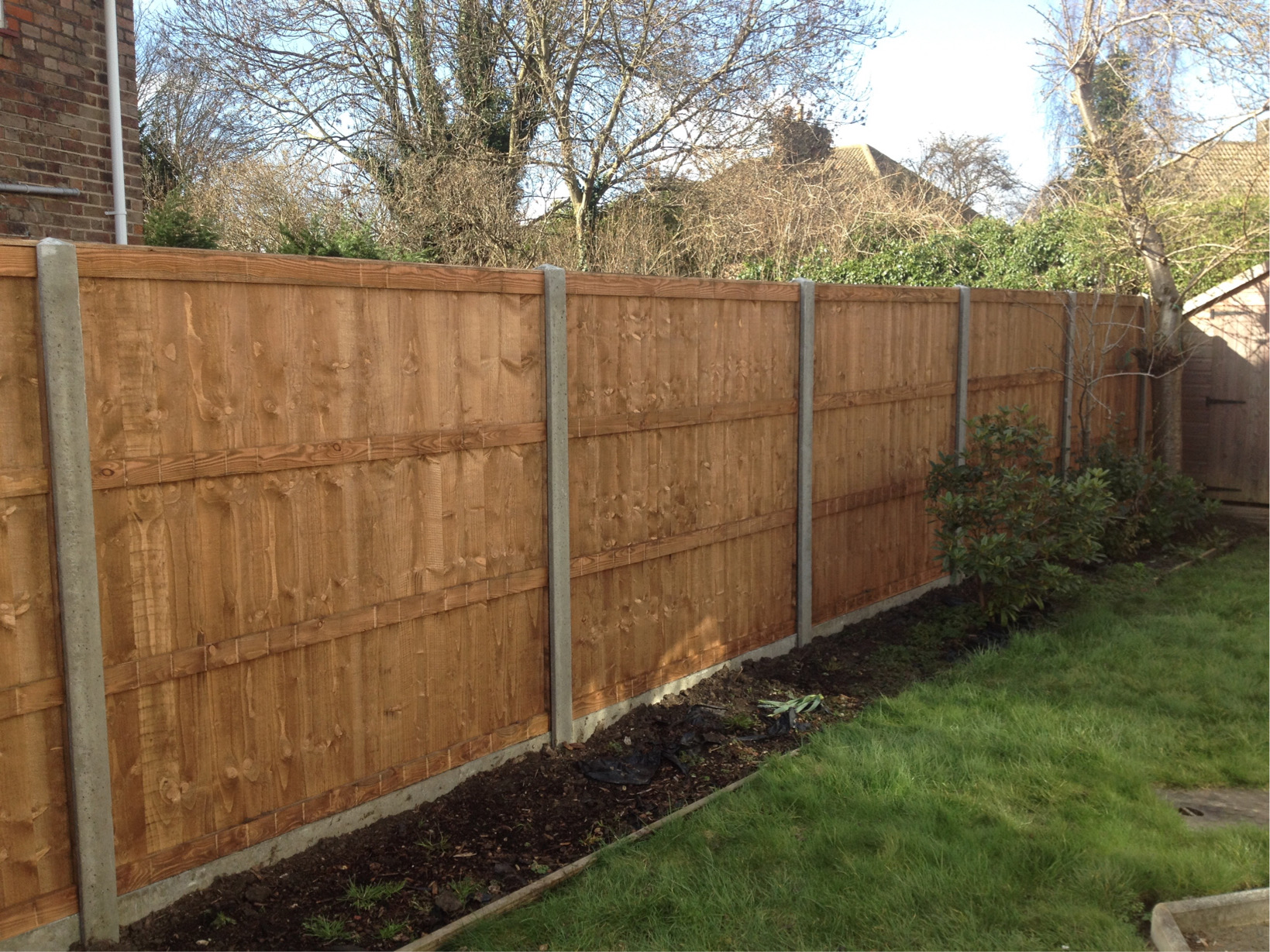
Closeboard fencing, individual vertical boards, horizontal screening and prefabricated panels all respond differently because the timber is arranged and fixed differently. The dimensions and type of timber matter too.
This is why we do not think it is useful to judge every fence by one rule about how much movement is acceptable. The construction has to suit the material being used.
Fixings Have To Allow The Fence To Do Its Job
Fixings may be small, but across a fence there can be hundreds of them. They need to hold the timber securely through years of wet and dry conditions while the timber around them naturally changes.
The choice and positioning of fixings therefore matters. A fixing that deteriorates outdoors can eventually weaken the construction. Certain metals can also react with particular timbers and moisture, potentially leaving unwanted staining or marks.
At the same time, simply adding more fixings is not necessarily the answer. Timber still needs to be able to behave naturally. The objective is a fence that remains secure without trying to force a natural material to behave as though it cannot move.
The Posts Tell A Different Story
Movement in the timber boards and movement of the entire fence are not the same thing. If boards shrink slightly during a very dry summer, that can be normal. If the whole fence begins leaning or posts are moving significantly in the ground, we would look at that differently.
The posts transfer wind loads from the fence into the ground, so their stability is fundamental to the whole structure. But stability is only part of the consideration. How long the post itself will last in the ground matters too.
We have been building timber fencing for many years, and during that time the materials and methods available to protect timber posts have continued to develop. One example is the introduction of products such as PostSavers, which provide additional protection around the particularly vulnerable area where a timber post passes between the ground and the air above it.
This transition zone is important because it is repeatedly exposed to changing moisture conditions. Over the life of a fence, that can have a significant effect on the timber.
Where appropriate, we use this type of protection because we have found it to be a genuinely useful development in timber fencing. It does not change the need for good installation or suitable timber, but it can provide another layer of protection and help extend the working life of the post.
For us, this is also part of building from experience. The way we built a fence many years ago does not have to remain exactly the way we build one today. When better materials or details become available and prove useful, it makes sense to incorporate them.
Ground conditions also vary. A fence installed in one garden may be dealing with completely different soil from a similar fence only a few streets away. This is another reason why the visible timber is only part of the construction.
The Bottom Of The Fence Deserves Attention
The area where fencing meets the ground is particularly important. Timber that remains continuously close to wet soil or trapped organic material experiences very different conditions from timber that can dry properly.
Gravel boards or other appropriate detailing can help separate fencing from the conditions at ground level, depending on the type of fence being constructed. But soil levels can change, planting grows, leaves accumulate and mulch may be added. Over several years, material can gradually build up against the bottom of a fence that originally had good clearance.
Both Sides Of A Fence May Live In Different Environments
One side might receive direct afternoon sun while the other remains shaded. There may be dense planting on one side and an open patio on the other. Irrigation or a sprinkler may regularly wet one side while the opposite face stays relatively dry. Even airflow can be different.
As gardens mature, those differences can become greater. A hedge that was small when the fence was built may eventually create permanent shade and reduce airflow. Climbing plants can retain moisture close to the timber. New planting may introduce irrigation where none existed before.
Some Summer Movement May Reverse
After a prolonged dry period, gaps can become more noticeable and boards can appear drier. When moisture levels increase again, some of that movement may reduce.
That is why we would not automatically treat every change noticed during a heatwave as something that needs immediate correction. There is an important difference between seasonal movement and progressive failure.
When Should Movement Get Attention?
We would pay more attention when movement begins affecting how the fence actually performs. A significantly loose post, boards pulling away from their fixings, persistent distortion, damaged components or areas that remain continually wet deserve investigation.
The pattern matters as much as the individual symptom. One board changing slightly during an unusually dry summer tells a very different story from an entire section of fencing beginning to lean.
A Fence Should Be Allowed To Age
Like decking, timber fencing does not need to look exactly as it did on installation day for the construction to remain healthy. Colour changes, small movements occur, planting develops around it and the conditions of the garden evolve.
Good construction cannot stop timber being timber. Nor should it try to. The aim is to build the fence so that normal material movement remains normal, while providing enough stability, appropriate detailing and suitable fixings for it to continue doing its job year after year.
White Edge Thought
TIMBER MOVEMENT IS NOT THE PROBLEM. THE IMPORTANT PART IS HOW THE CONSTRUCTION DEALS WITH IT.
Was this article useful?
Thank you for your feedback.